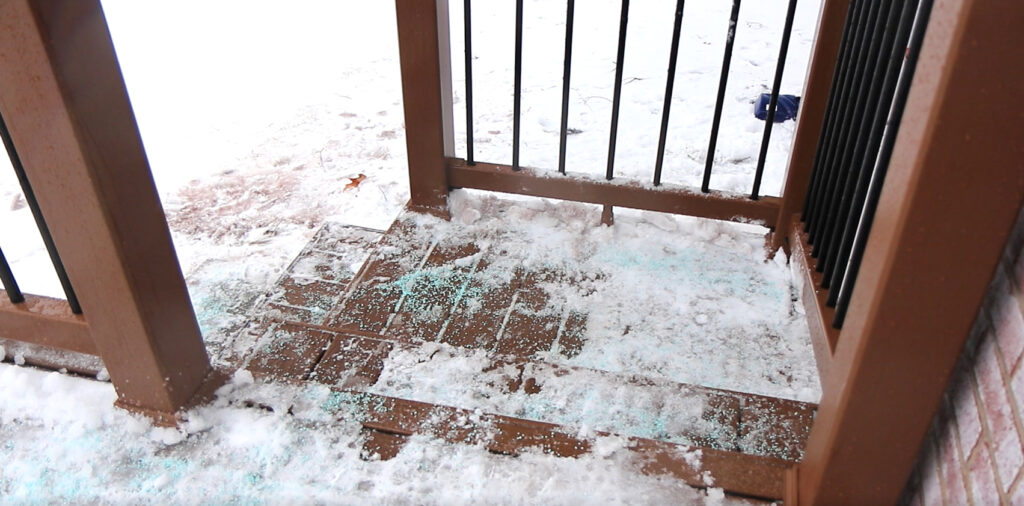
In the realm of ice melting products, calcium chloride ice melt is a commonly used option, particularly for concrete surfaces. This comprehensive analysis will delve into the benefits and drawbacks of calcium chloride ice melt, comparing it with alternatives like magnesium chloride ice melt, and discussing why a chloride-free solution like Safe Paw might be a better option.
Table of Contents
Benefits of Calcium Chloride Ice Melt
- Effective at Low Temperatures: Calcium chloride ice melt works efficiently in extremely cold conditions, making it a reliable choice for harsh winters.
- Rapid Ice Melting Action: This compound is known for its quick action in melting ice, an essential quality for urgent ice removal needs.
- Less Harmful to Concrete Compared to Sodium Chloride: When compared to traditional sodium chloride (rock salt), calcium chloride is generally less damaging to concrete surfaces.
Get ready for winter with Safe Paw: The Pet-Friendly Ice Melter that cares – for your home, pets, and planet.
Drawbacks of Calcium Chloride Ice Melt
Despite its effectiveness, calcium chloride ice melt has several disadvantages, particularly when used on concrete surfaces:
- Corrosive Nature: It can still cause corrosion to metal fixtures and reinforcements within concrete structures.
- Environmental Concerns: Similar to other chloride-based deicers, calcium chloride can contribute to environmental degradation, affecting nearby vegetation and water sources.
- Health Risks for Pets and Humans: If ingested or in contact with skin, it can be harmful, posing a risk to pets and humans alike.
- Residual Impact: Calcium chloride leaves behind a residue that can be slippery and may require additional cleaning efforts.
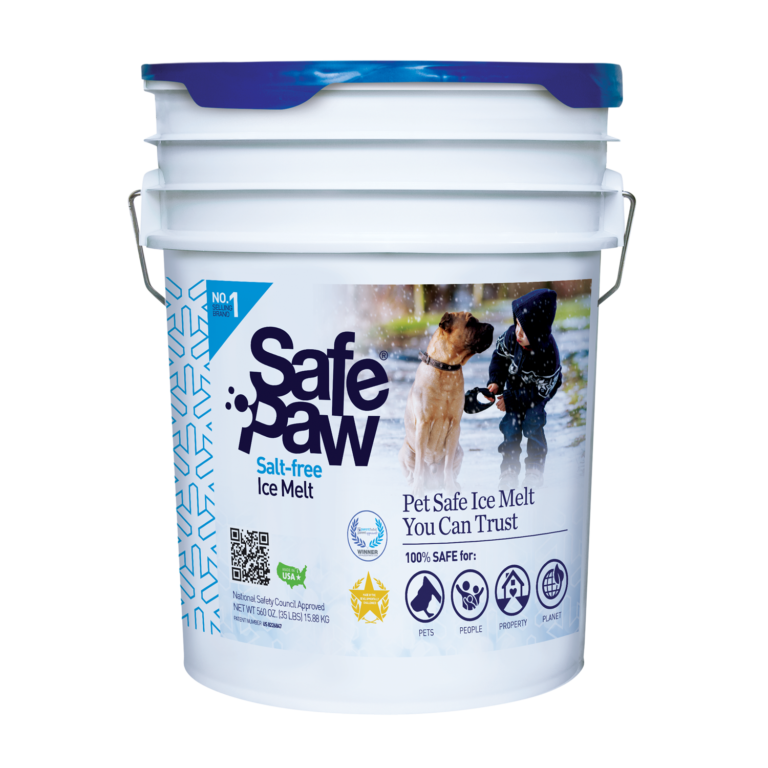
Safe Paw
It is a pet-friendly, eco-friendly ice melt that is safe for your family, pets, and property. It is made with a unique formula that is gentle on paws and concrete, and it melts ice and snow quickly and effectively.
Safe Paw is the perfect choice for winter weather!
Compared with Magnesium Chloride Ice Melt
Magnesium chloride ice melt is another popular choice. While it is less corrosive and safer for pets and plants than calcium chloride, it still contains chloride, which means some environmental and health concerns remain.
Get ready for winter with Safe Paw: The Pet-Friendly Ice Melter that cares – for your home, pets, and planet.
The Case for Chloride-Free Alternatives
Given the drawbacks of chloride-based deicers, including calcium chloride, there is a growing interest in alternatives like Safe Paw. This chloride-free and toxin-free ice melt presents numerous advantages, especially for use on concrete surfaces:
- Safe for Pets and People: Safe Paw is non-toxic, eliminating the health risks associated with calcium chloride and magnesium chloride ice melts.
- Environmentally Friendly: It does not contain harmful chlorides, thus protecting the surrounding ecosystem.
- Non-Corrosive to Concrete: Unlike calcium chloride, Safe Paw does not pose a risk of corrosion to concrete surfaces or metal fixtures.
- Effective in Low Temperatures: It works efficiently in temperatures as low as -2°F, offering comparable performance to calcium chloride.
- No Harmful Residue: Safe Paw leaves behind no slippery residue, reducing cleanup efforts and enhancing safety.
- Long Shelf Life and Excellent Spread Rate: These characteristics make Safe Paw a cost-effective and convenient choice for maintaining concrete surfaces during winter.
Safe Paw is the only ice melt that can be rightfully labeled as pet-safe, meaning it is safe even if ingested by pets. It is chloride-free and non-toxic. However, we do not recommend using any ice melt (including Safe Paw) on concrete which is less than 12 months of age.
Calcium Magnesium Ice Melt: Mixed Results in Real-World Concrete Durability
Building on the discussion of calcium chloride’s power and pitfalls, recent experimental studies show that calcium magnesium ice melt (i.e. those mixes containing both calcium chloride and magnesium chloride) can have surprisingly harsh effects on concrete over longer time frames. A study titled Concrete Deterioration by Deicing Salts indicates that concrete exposed to magnesium + calcium chloride brines suffers from more rapid surface scaling, increased internal cracking, and loss of compressive strength over several freeze-thaw cycles compared to concrete exposed to just one type of salt.
When you compare magnesium chloride vs calcium chloride, it’s often assumed that magnesium chloride is gentler. And while it is marginally less corrosive in certain cases, when used repeatedly (especially in calcium-rich mixtures) it amplifies salt penetration and moisture retention in concrete pores. These mixed salts can accelerate the degradation process, particularly in driveways that aren’t well sealed or are older.
Melt Ice on Driveway: What Efficiency Really Costs
If you’ve ever wondered how fast a de-icer works, or how much to expect when you melt ice on driveway, there’s more nuance than labels suggest. According to a comparison (SGS Testing Services, 2024), calcium chloride starts melting ice significantly quicker in very cold conditions: for example, at around 0°F, calcium chloride melted over 40% more ice than magnesium chloride in the first five minutes of application.
But speed comes with trade-offs. Faster melt under very cold conditions typically means you’re using stronger concentrations, which also means higher moisture ingress, more chemical stress, and more residue. That residue accelerates damage under freeze-thaw cycles. So while best salt for concrete driveway might seem like choosing the fastest melting product, in reality the ones that look good in the lab may cause more deterioration outdoors over time.
Dog Friendly Salt for Ice: Understanding Pet Risks
For households with pets, the question isn’t just concrete—it’s safety. If you’ve used typical calcium chloride or magnesium chloride blends, even when marketed as “pet friendly salt for ice,” you should be aware of veterinary observations and studies.
What this means in practice is: even if a salt blend claims “dog friendly,” unless it’s entirely salt-free (no calcium or magnesium chlorides), you’re still accepting some level of risk. Hence the growing preference for non-chloride, non-salt products around pets.
Chemical Distress: How Calcium & Magnesium Salts Attack Concrete Internally
Beyond surface damage, the chemical mechanism by which calcium chloride, magnesium chloride, or their combination weaken concrete is becoming better understood. The U.S. Federal Highway Administration (FHWA) tech brief Chemical Deicers and Concrete Pavement describes “chemical deicer distress” as patterns of internal damage (like “joint shadowing” and especially concrete disintegration near joints) that occur because the salts disrupt cement paste, leach calcium out of key binding components, and exacerbate freeze-thaw cycles.
Additionally, lab work shows that repeated contact with magnesium- or calcium-based brines increases the risk of alkali-silica reactions (ASR) or calcium oxychloride formation, which can expand internally and cause cracking from the inside out. These reactions are less visible at first but significantly compromise long-term integrity.
What to Do If You Still Use Calcium or Magnesium Based Ice Melters
Even if Safe Paw or other non-chloride options are your go-to, many people still rely on calcium or magnesium-based ice melts out of necessity. Here are updated best practices to reduce harm:
- Seal early and often — Applying a high-quality penetrating sealer to concrete before winter reduces moisture and salt penetration, slowing chemical distress.
- Limit concentration and frequency — Use the minimum effective dose. More is not always better; overapplication is what’s most damaging.
- Spot treat high-traffic areas rather than wide-area blanket treatments to reduce total exposure.
- Rinse and clean residual salts in the spring when safe, to reduce lingering chemical exposure to concrete, plants, and pets.
- Monitor visible signs like scaling, pitting, or discoloration; early detection can allow for repairs before damage gets deep.
Conclusion
Calcium chloride ice melt delivers quick action, especially in frigid weather, but when paired with magnesium chloride in calcium magnesium ice melt blends, or used repeatedly, it accelerates structural damage significantly. Comparing magnesium chloride vs calcium chloride shows that neither is free from drawbacks—though their performance in extreme cold temp is strong, their long-term cost to concrete, to pets, and to nearby ecosystems grows steadily.
If your priority is preserving your driveway, safeguarding pets, and minimizing ongoing repairs, relying solely on salt-based solutions becomes increasingly risky. Using dog friendly salt for ice blends helps a bit, but many of their benefits are marginal when weighed against the damage.
That makes chloride-free, fully salt-free options like Safe Paw not just alternatives, but smarter winter maintenance strategies. They avoid destructive chemical reactions, protect pawed family members, and help surfaces last longer. Freeze-thaw cycles, salt penetration, chemical distress—they all shrink in impact when salt is taken out of the equation.
Get ready for winter with Safe Paw: The Pet-Friendly Ice Melter that cares – for your home, pets, and planet.
Try Our Other Winter Safety Products
Safe Thaw
Safe Thaw was created as the ice management solution for tough winter environments. Ideal in commercial and industrial properties, shops, government agencies, bridges, construction. It’s 100% Salt-Free and Chloride-Free.

Walk On Ice
The slip and fall prevention solution, for any icy or snowy surface, on a handy portable package! Lightly spread around your walkway, driveway, vehicle, tires, and pathways. Turn ANY icy surface instantly, into a non-skid, slip-free surface.