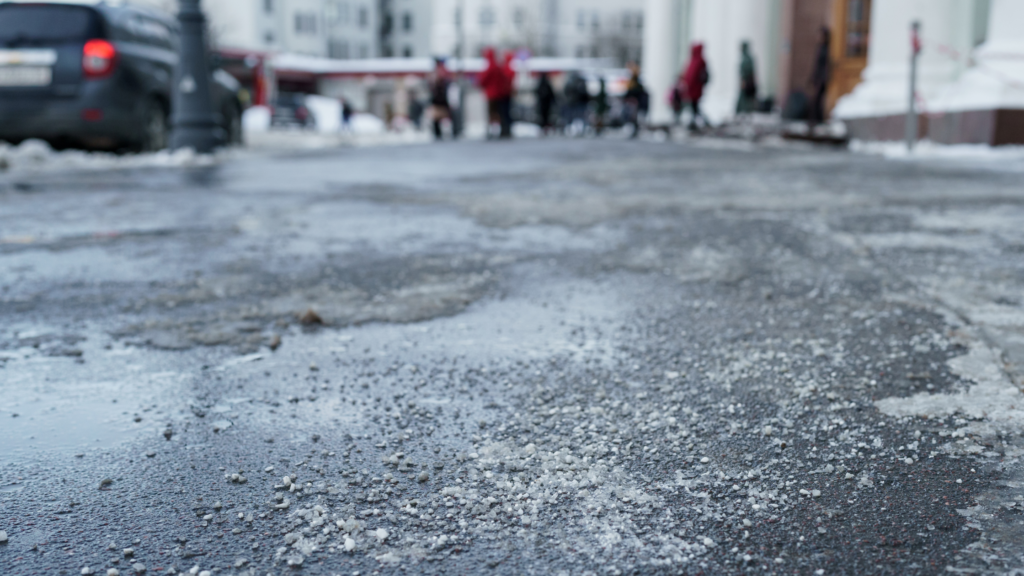

While traditional de-icing salts, commonly referred to as salt for winter, have long been used to tackle icy roads and driveways, their hidden costs extend far beyond the initial price tag. From environmental degradation to infrastructure damage, the real impact of using salt to melt ice is significant. Exploring these hidden consequences can help homeowners and municipalities make more informed choices and adopt safer, more sustainable alternatives like Safe Paw Ice Melter.
Environmental Impact of Conventional De-Icing Salts
Traditional de-icing salts, particularly sodium chloride, wreak havoc on the environment. When snow and ice melt, the salt dissolves and runs off into nearby soil and water sources. This contamination alters soil chemistry, reducing its fertility and harming vegetation. Trees and shrubs near treated areas often show signs of salt stress, including stunted growth and brown, withered leaves.
Additionally, the runoff enters waterways, raising salinity levels in rivers, streams, and lakes. Elevated salt levels can be toxic to aquatic life, disrupting ecosystems and harming fish, amphibians, and aquatic plants. The environmental footprint of using salt to melt ice makes it a poor choice for eco-conscious homeowners.
Infrastructure Degradation Due to Salt Usage
One of the most expensive hidden costs of using traditional salts is the damage to infrastructure. Sodium chloride is highly corrosive and accelerates the deterioration of roads, bridges, and vehicles. It weakens concrete by exacerbating freeze-thaw cycles, leading to cracking and spalling, while also corroding metal components, including rebar in concrete structures.
The damage isn’t limited to public infrastructure. Driveways, walkways, and home exteriors are also at risk, with repair and maintenance costs adding up over time. Opting for a chloride-free product like Safe Paw can prevent such damage while keeping surfaces ice-free.
Health and Safety Concerns Linked to Salt Application
Beyond environmental and structural impacts, traditional salts pose risks to human and animal health. Airborne salt particles can irritate the respiratory systems of people and pets, especially during windy conditions. For pets, walking on salt-treated surfaces can lead to paw irritation, dryness, and cracking. Ingesting salt while licking their paws can cause gastrointestinal distress and, in severe cases, toxicity.
Safe Paw Ice Melter, a pet-safe and non-toxic alternative, eliminates these health risks, making it a more responsible choice for families with children and pets.
Economic Analysis: Short-Term Savings vs. Long-Term Expenses
The initial affordability of traditional de-icing salts often misleads users into overlooking their long-term costs. While a bag of rock salt may be inexpensive upfront, the cumulative costs of repairing infrastructure, remediating environmental damage, and addressing health issues far outweigh the savings.
Switching to products like Safe Paw, which is effective, non-corrosive, and eco-friendly, may seem like a higher upfront investment but can significantly reduce long-term expenses. It also eliminates the need for frequent reapplications, adding to its cost-effectiveness.
Conclusion
While traditional salt for winter solutions might seem like a quick fix for icy surfaces, their hidden costs to the environment, infrastructure, and health are undeniable. Products like Safe Paw, which are salt-free and eco-friendly, offer a more sustainable and safer alternative. By choosing chloride-free ice melts, homeowners can protect their property, health, and the planet, ensuring that winter maintenance doesn’t come at an unnecessary cost.