When winter’s icy conditions render walkways and driveways hazardous, the use of ice melter salt becomes crucial. Understanding the different types of salt-based ice melters, including their benefits and drawbacks, is key to making an informed decision. This comprehensive guide explores the nuances of using salt-based ice melters and why alternatives like Safe Paw might be a better choice.
Table of Contents
The Basics of Salt-Based Ice Melters
Salt-based ice melters work on the principle of lowering the freezing point of water, a process known as freezing point depression. This effect causes ice and snow to melt more rapidly than at standard freezing temperatures.
Common Types of Salt-Based Ice Melters
- Sodium Chloride (Rock Salt): The most commonly used ice melter salt. It’s effective, affordable, and readily available but beware of its consequences which may erode your driveway and roof.
- Magnesium Chloride: Known for its lower environmental impact and effectiveness at colder temperatures compared to sodium chloride, but not necessarily it will be good for your pets and children.
- Calcium Chloride: This might be highly efficient in melting ice, even in extremely low temperatures, but the catch is if your pet might lick it there are chances of falling ill, and it may also irritate their paws.
Get ready for winter with Safe Paw: The Pet-Friendly Ice Melter that cares – for your home, pets, and planet.
How Does Table Salt Melt Ice?
Table salt, or sodium chloride, can also be used as an ice melter. It works by disrupting the structure of ice, causing it to melt. However, its effectiveness is limited compared to more specialized ice melter salts designed for harsh winter conditions.
Evaluating the Effectiveness of Salt-Based Ice Melters
When choosing an ice melter salt, consider factors like the typical temperature range in your area and the specific environmental conditions. Magnesium chloride and calcium chloride are more effective at lower temperatures than standard sodium chloride but they are highly injurious to pets and irritate pet’s paws, if ingested your pet might fall into serious illness also they are not eco-friendly types.
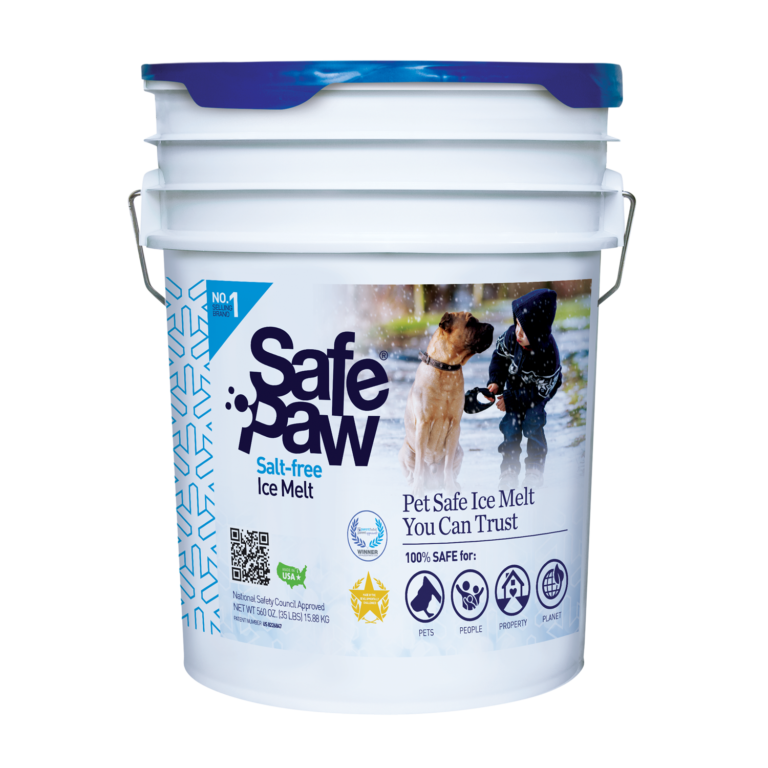
Safe Paw
It is a pet-friendly, eco-friendly ice melt that is safe for your family, pets, and property. It is made with a unique formula that is gentle on paws and concrete, and it melts ice and snow quickly and effectively.
Safe Paw is the perfect choice for winter weather!
The Negatives of Using alt-Based Ice Melters
Despite their effectiveness, salt-base
ice melters come with significant downsides:
- Corrosive Properties: They can damage concrete, metal surfaces, and other infrastructure, leading to costly repairs.
- Environmental Impact: Salt-based ice melters can harm vegetation, contaminate water sources, and disrupt local ecosystems.
- Pet Safety Concerns: If ingested or contacted by pets, these substances can be harmful, leading to health issues such as paw irritation or digestive problems.
Get ready for winter with Safe Paw: The Pet-Friendly Ice Melter that cares – for your home, pets, and planet.
Safe Paw: A Safer and Eco-Friendly Alternative
Given the negatives associated with salt-based ice melters, Safe Paw offers a superior alternative:
- Chloride-Free and Non-Toxic: Safe Paw is free from harmful chlorides, making it safe for pets, humans, and the environment.
- Effective in Cold Temperatures: It melts ice effectively at temperatures as low as -2°F.
- Non-Corrosive: Unlike traditional ice melters, Safe Paw does not damage concrete or metal surfaces.
- Eco-Friendly: Its environmentally friendly formulation ensures it doesn’t harm plants or contaminate water sources.
- Long Shelf Life and Efficient Spread Rate: Its granular form allows for efficient spreading and long-lasting use, making it a cost-effective solution.
Looking Closer at Snowmelt: Why Warmer Isn’t Always Faster
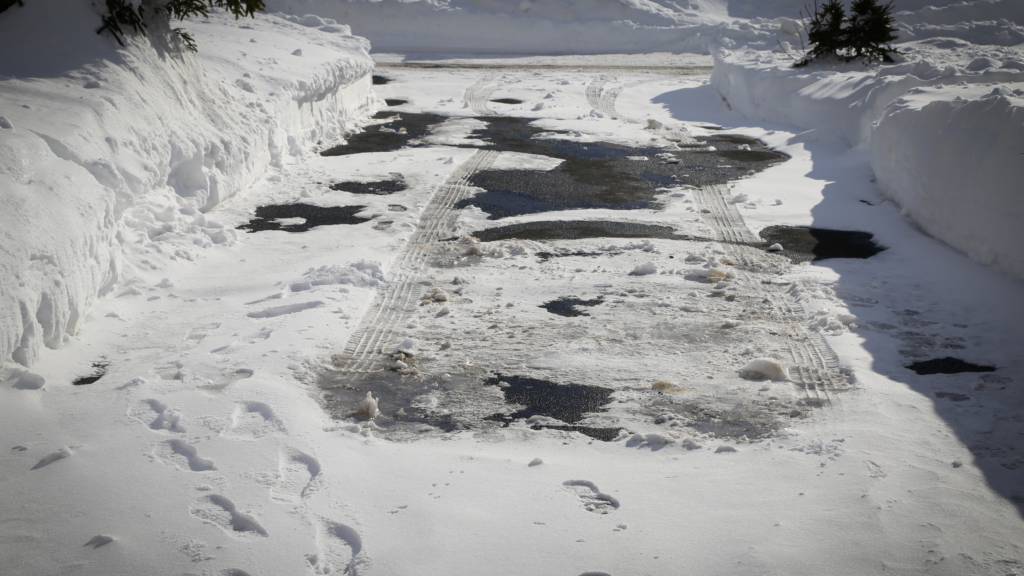
We’ve talked before about how salt-based ice melters work and the common types—sodium, calcium, magnesium chlorides—but recent research is showing that there’s more to snow and ice melting than just the chemical. Surface temperature, sun exposure, and even pavement or driveway material play a much bigger role than many realize. For example, concrete that’s shaded by trees or buildings holds cold longer, so even a strong salt for driveway ice melting product won’t be very effective until that concrete warms up.
Also, studies show that paved surfaces treated with salt can absorb more moisture (because concrete is porous), which means salt can worsen freeze-thaw damage by holding water in, which later freezes and worsens cracking.
Pet Friendly Sidewalk Salt vs Reality: What Science Says
You’ve probably seen “pet friendly sidewalk salt” labels, but real-world testing and material science show that no chloride salt is truly “safe” in all conditions. Even when gentler salts like magnesium chloride are used, residue remains on surfaces. Pets walking over it still get irritation, especially on paws, and licking paws or fur can lead to ingestion of small but harmful amounts.
An interesting fact: new studies (2024-2025) show that even small chloride concentrations in soil and shallow groundwater near walkways are accumulating over repeated winters, causing subtle but measurable harm to plants and altering soil microbiomes. This means pet safe claims need more scrutiny: is the product salt-based? Are the pavements sealed? How often is it used?
What Degrees Does Snow Melt (Without Salt) & How That Informs Best Practices
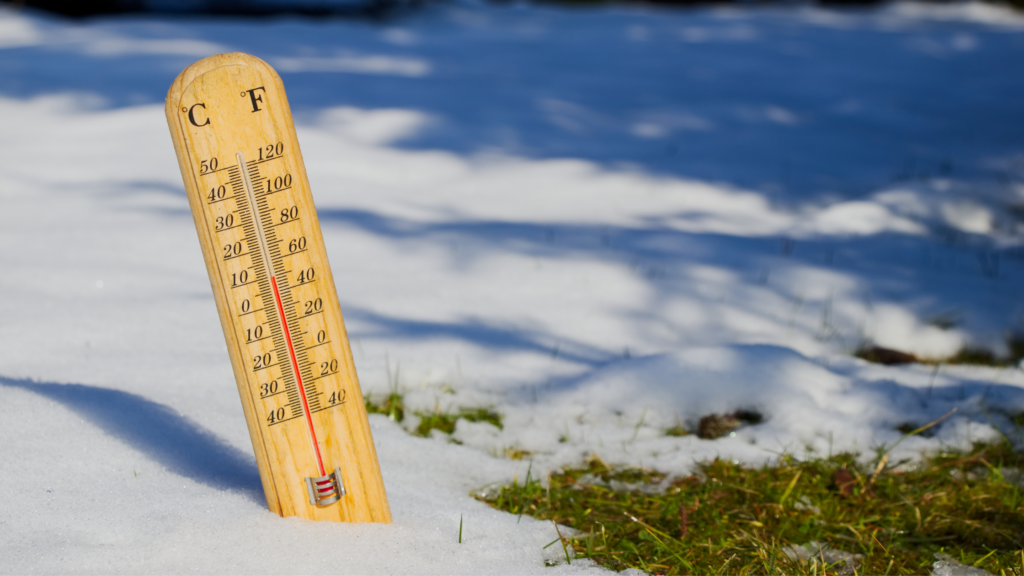
We often assume snow melts only when it’s above freezing (32°F / 0°C), but real conditions show nuance. According to research, snowmelt can begin below freezing in certain cases—when there’s direct sunlight, warming effects from dark pavement or asphalt, or when warm air radiates off nearby surfaces. Conversely, shaded concrete may stay icy even when air temperatures rise above freezing.
This means that knowing what degrees does snow melt in your specific driveway or sidewalk (considering sun, shading, and the material) is super useful. With that knowledge, you can use less salt, or choose better timing for applying pet friendly salt for snow, or better yet, use a safe ice melt product so you’re not fighting the environment every winter.
Sealers & Surface Treatments: Hidden Helpers with Big Impact
While most articles focus on the chemicals themselves, a less discussed but increasingly relevant angle is the use of protective sealers on concrete and asphalt. Recent sources suggest that applying a penetrating sealer before winter significantly reduces the absorption of salt-laden water. The sealer forms a barrier that impedes moisture entry, which means less freeze-thaw damage, less scaling, and less salt penetration.
So even if you end up using salt-based melters, protecting your driveway with a good sealer can stretch its lifespan. Combined with using salt for driveway ice melting products more judiciously (targeted application, minimal doses), this becomes part of a smarter winter strategy.
Real-World Costs: Repairs, Health, and Hidden Expenses
Beyond bottles and bags of ice melt, the true cost of salt-based melters is showing up in repair bills and health observations. For instance:
Concrete driveways in many regions have needed resurfacing much earlier than expected—often after 5–7 winters with heavy salt use—rather than the 15-20 years expected.
Metal undercarriages of vehicles, fences, railings and even nails in decks are showing rust and corrosion much sooner in high-salt areas.
Pet clinics report seasonal spikes in paw pad injuries and skin irritations each winter, particularly from cheap salts or overuse.
These hidden costs are rarely shown on the price tag of salt but add up quickly. When you compare that to a safer product like Safe Paw, even if the upfront cost per bag is higher, over a few winters the savings in concrete, vehicle, pet, and cleaning costs are compelling.
Conclusion
All these newer insights (surface conditions, sealing, real melting-temperature variability, and the cumulative damage costs) point to one thing: relying solely on salt-based ice melters is a risky, costly strategy. Whether you’re counting pet friendly salt for snow or strong chemical salts, they all carry hidden trade-offs—especially for your driveway, your pets, and your environment.
Safe Paw offers a different path. By being salt and chloride-free, non-corrosive, and formulated to work even in challenging conditions, it helps you shift the equation. Instead of fighting against your driveway’s surfaces, the cold shadows, and repeated freeze-thaw cycles, you get ice control without the collateral damage. Over several winters, that means fewer cracks, better surfaces, fewer vets visits, and more peace of mind.
Get ready for winter with Safe Paw: The Pet-Friendly Ice Melter that cares – for your home, pets, and planet.
Try Our Other Winter Safety Products
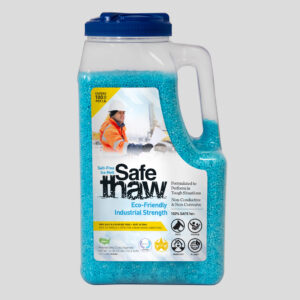
Safe Thaw
Safe Thaw was created as the ice management solution for tough winter environments. Ideal in commercial and industrial properties, shops, government agencies, bridges, construction. It’s 100% Salt-Free and Chloride-Free.
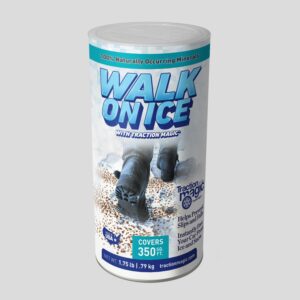
Walk On Ice
The slip and fall prevention solution, for any icy or snowy surface, on a handy portable package! Lightly spread around your walkway, driveway, vehicle, tires, and pathways. Turn ANY icy surface instantly, into a non-skid, slip-free surface.