When winter brings snow and ice, understanding the chemistry behind snow melt is crucial, especially for maintaining safe and accessible driveways. This article delves into how deicers work and why selecting the right product is essential for driveway care.
Table of Contents
The Science of Snow Melt
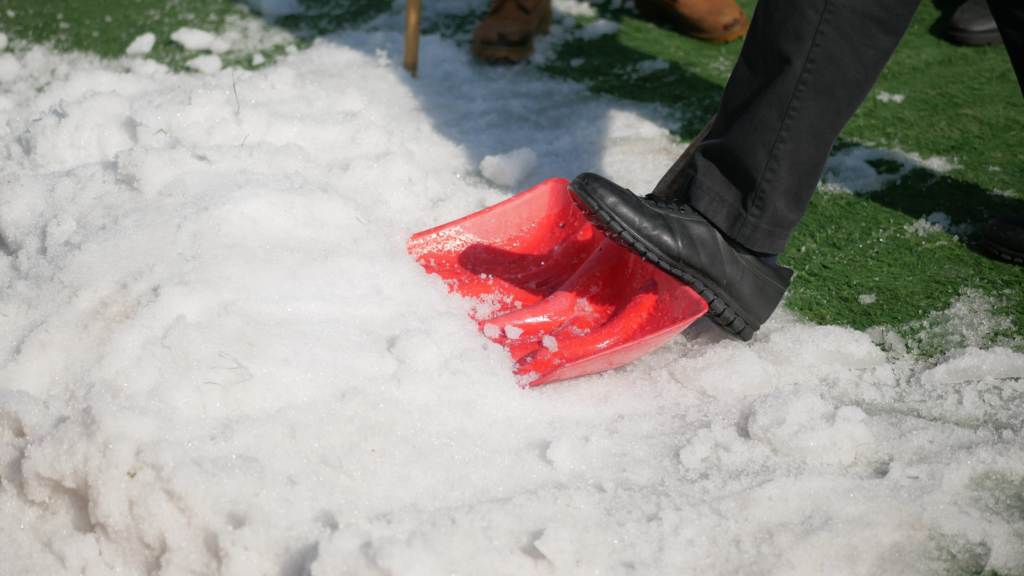
Snow melt involves the application of substances that lower the freezing point of water, turning ice and snow into a liquid form. This process is a key part of winter maintenance, particularly for driveways where safety and accessibility are paramount.
Get ready for winter with Safe Paw: The Pet-Friendly Ice Melter that cares – for your home, pets, and planet.
How Deicers Work
Deicers work on the principle of freezing point depression. When a deicer is applied to snow or ice, it dissolves into the water, forming a solution with a lower freezing point than the ice itself. This causes the ice to melt and prevents the formation of new ice.
Safe Paw
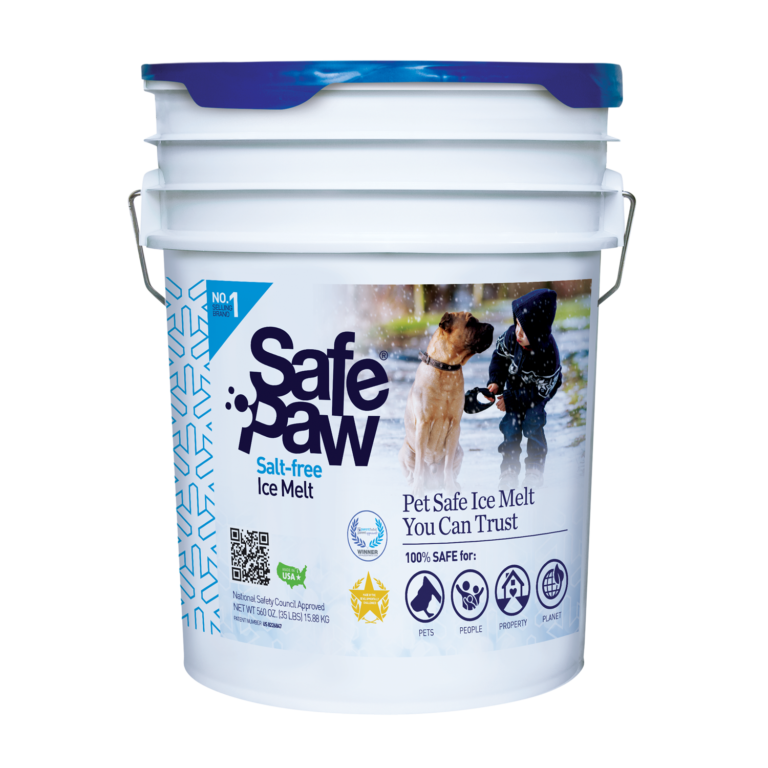
It is a pet-friendly, eco-friendly ice melt that is safe for your family, pets, and property. It is made with a unique formula that is gentle on paws and concrete, and it melts ice and snow quickly and effectively.
Safe Paw is the perfect choice for winter weather!
Common Deicers and Their Components
- Sodium Chloride (Rock Salt): Widely used, this deicer is effective but has limitations at very low temperatures.
- Calcium Chloride: Known for its high efficiency in cold conditions but beware of its corrosive properties which are caused to driveways.
- Magnesium Chloride: Similar to calcium chloride but less corrosive still like all salts which causes damage to pets, properties, and driveways.
Get ready for winter with Safe Paw: The Pet-Friendly Ice Melter that cares – for your home, pets, and planet.
The Impact of Salt and Chloride-Based Deicers on Driveways
Using salt and chloride-based deicers on driveways comes with several drawbacks:
- Corrosiveness: These substances can corrode metal and damage concrete surfaces, leading to costly repairs.
- Environmental Concerns: Chloride runoff can harm plants and contaminate groundwater.
- Pet and Human Health Risks: If ingested, these chlorides can be harmful. They are also harsh on pet paws and can cause skin irritation.
Safe Paw: A Safe and Effective Alternative for Driveways
Given these concerns, Safe Paw stands out as an ideal snow melt solution for driveways:
- Non-Corrosive: Its chloride-free formula means it won’t damage driveway surfaces.
- Environmentally Friendly: Being toxin-free, Safe Paw doesn’t contribute to pollution or harm plant life.
- Safe for Pets and Humans: It is non-toxic, ensuring the safety of pets and family members.
- Efficiency in Low Temperatures: Effective at temperatures as low as -2°F, it’s reliable even in extreme cold.
- Long Shelf Life and Spread Rate: Its granular form ensures ease of application and cost-effectiveness.
What Temperature Does Snow Melt and Why It Matters for Driveways
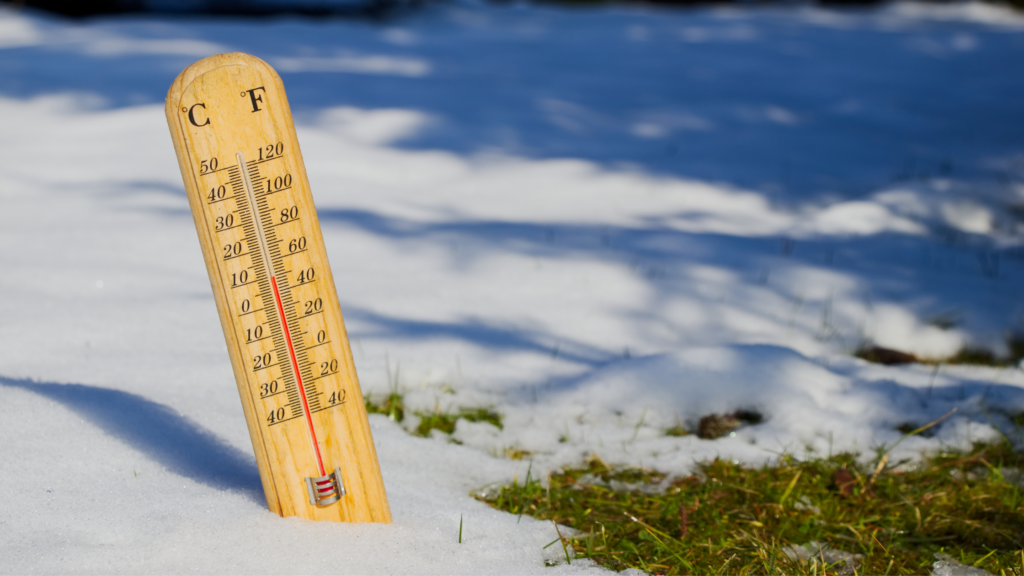
After exploring how deicers work, it’s worth asking: what temperature does snow melt naturally? The answer seems simple—0°C (32°F)—but in reality, conditions like sunlight, pressure, and surface materials all play a role. For example, snow sitting on dark asphalt may start softening above freezing because the surface absorbs heat. Meanwhile, shaded areas or concrete that holds cold longer can keep snow frozen well past the usual threshold.
This is why homeowners often notice patchy melting on their driveways. Even when the air feels “warm enough,” the snow freezing point can be influenced by local conditions, making some areas stubbornly icy. That’s when deicers come into play, but the type you choose will determine how effectively they work in these borderline temperatures.
Magnesium Chloride vs Calcium Chloride: Which Performs Better?
When the mercury drops, homeowners often compare magnesium chloride vs calcium chloride to see which works best. Calcium chloride is the heavy hitter—it can keep melting ice at temperatures as low as -25°C (-13°F). Magnesium chloride is milder, usually effective down to -15°C (5°F).
But effectiveness isn’t the only thing to think about. Calcium chloride generates a lot of heat when dissolving, which speeds up melting but also makes it harsher on concrete and vegetation. Magnesium chloride is less aggressive but still a chloride-based deicer, meaning it can irritate pets’ paws and damage surfaces with repeated use.
So while both options beat basic rock salt in performance, they still come with trade-offs. For homeowners who want consistent results without worrying about corrosion or safety, chloride-free options like Safe Paw offer a smarter balance.
What Temperature Does Salt Melt At Compared to Alternatives?
Another common question is: what temperature does salt melt at? Traditional rock salt, or sodium chloride, is effective only until about -9°C (15°F). Once the temperature drops lower, it loses its power, leaving icy patches behind.
This limitation explains why some people switch to calcium chloride or magnesium chloride. They work at lower temperatures, but again, their impact on concrete, soil, and pets can’t be ignored. By contrast, chloride-free products bypass this limit by working on a different principle—breaking the bond between ice and the surface rather than simply lowering the freezing point. That’s why they stay effective even in harsh cold without causing the same damage.
Snow Freezing Point and the Role of Deicers
It’s also helpful to remember that the snow freezing point isn’t always a fixed number. Factors like impurities in the snow, the presence of salts, and surface conditions all shift the exact point where snow and ice stick around. For instance, snow treated with salt doesn’t freeze again at 0°C—it might stay liquid until temperatures dip closer to -9°C. Similarly, calcium chloride can push that threshold much lower, which is why it seems so powerful in severe cold.
But again, every chloride solution comes with side effects. The key takeaway for homeowners is that while science explains how these products manipulate freezing points, you don’t have to accept property damage or health risks as part of the deal.
Get ready for winter with Safe Paw: The Pet-Friendly Ice Melter that cares – for your home, pets, and planet.
Why Safe Paw Remains the Safer Snow Melt Choice
Once you’ve seen the pros and cons of magnesium chloride vs calcium chloride and asked “what temperature does salt melt at,” the bigger question becomes: which option actually keeps your home safe long-term? Safe Paw’s answer lies in its unique chloride-free formula.
- It performs in temperatures as low as -19°C (-2°F), covering most Canadian winter conditions.
- It’s completely safe for pets and children—no paw burns, no ingestion worries.
- It protects concrete driveways by avoiding the corrosive reactions caused by chlorides.
- It’s eco-friendly, breaking the cycle of runoff damage to soil and waterways.
In short, Safe Paw works with the science of snow melt instead of against it, giving you a practical solution without the hidden consequences.
Conclusion: Smarter Winter Decisions Through Science
Looking beyond the chemistry, one truth stands out: understanding what temperature does snow melt, what temperature does salt melt at, and how the snow freezing point shifts is key to choosing the right deicer. Sodium chloride is limited in cold, calcium chloride and magnesium chloride go further but come with risks, and chloride-free alternatives like Safe Paw deliver safety without compromise.
By making science-based choices, you protect not only your driveway but also your pets, family, and environment. Winter maintenance doesn’t have to be a trade-off—you can keep your property clear and safe without the long-term damage. Safe Paw proves that melting ice effectively and responsibly can go hand in hand.
Try Our Other Winter Safety Products
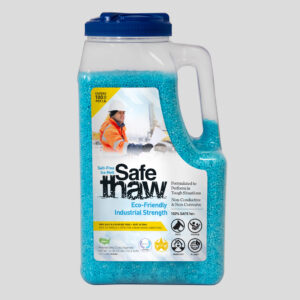
Safe Thaw
Safe Thaw was created as the ice management solution for tough winter environments. Ideal in commercial and industrial properties, shops, government agencies, bridges, construction. It’s 100% Salt-Free and Chloride-Free.
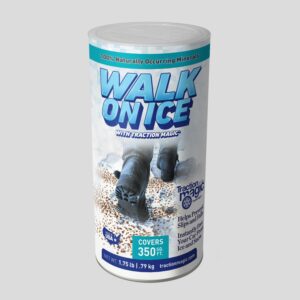
Walk On Ice
The slip and fall prevention solution, for any icy or snowy surface, on a handy portable package! Lightly spread around your walkway, driveway, vehicle, tires, and pathways. Turn ANY icy surface instantly, into a non-skid, slip-free surface.