SPCA Staging Website

Safe Paw® · Safety & surfaces

Pet-safe ice melt.
Thoughtful surface care.

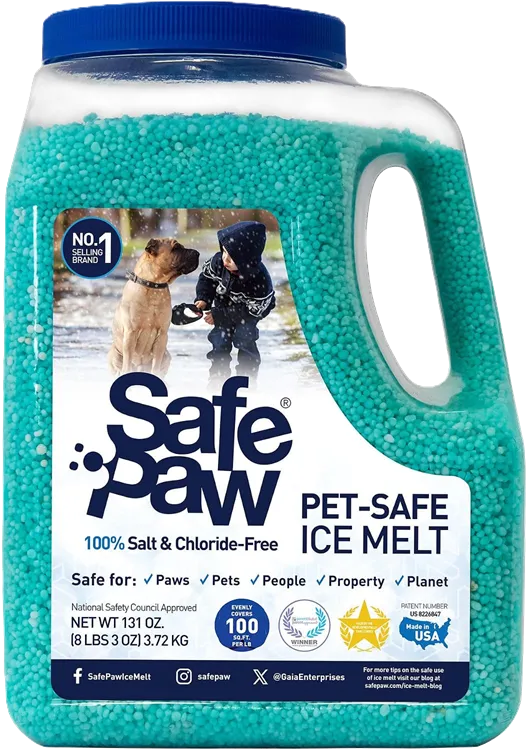
Safe Paw is a salt-free, chloride-free ice melt designed for homes with pets and children. Check your surface, compare common deicing options and follow the current package directions.

Salt-free
Chloride-free
Non-corrosive

Concrete has an age condition: do not use Safe Paw on concrete less than 12 months old.

Winter routes around the home deserve attention to both paws and the surface underneath.

Pets & family

What should pet households check?

Start with the ingredients, application directions and safety information. A few simple habits help you manage contact with treated winter areas.

Read the ingredients

Sodium, magnesium, calcium and potassium chloride are common deicer ingredients. Safe Paw uses a salt-free, chloride-free formula.
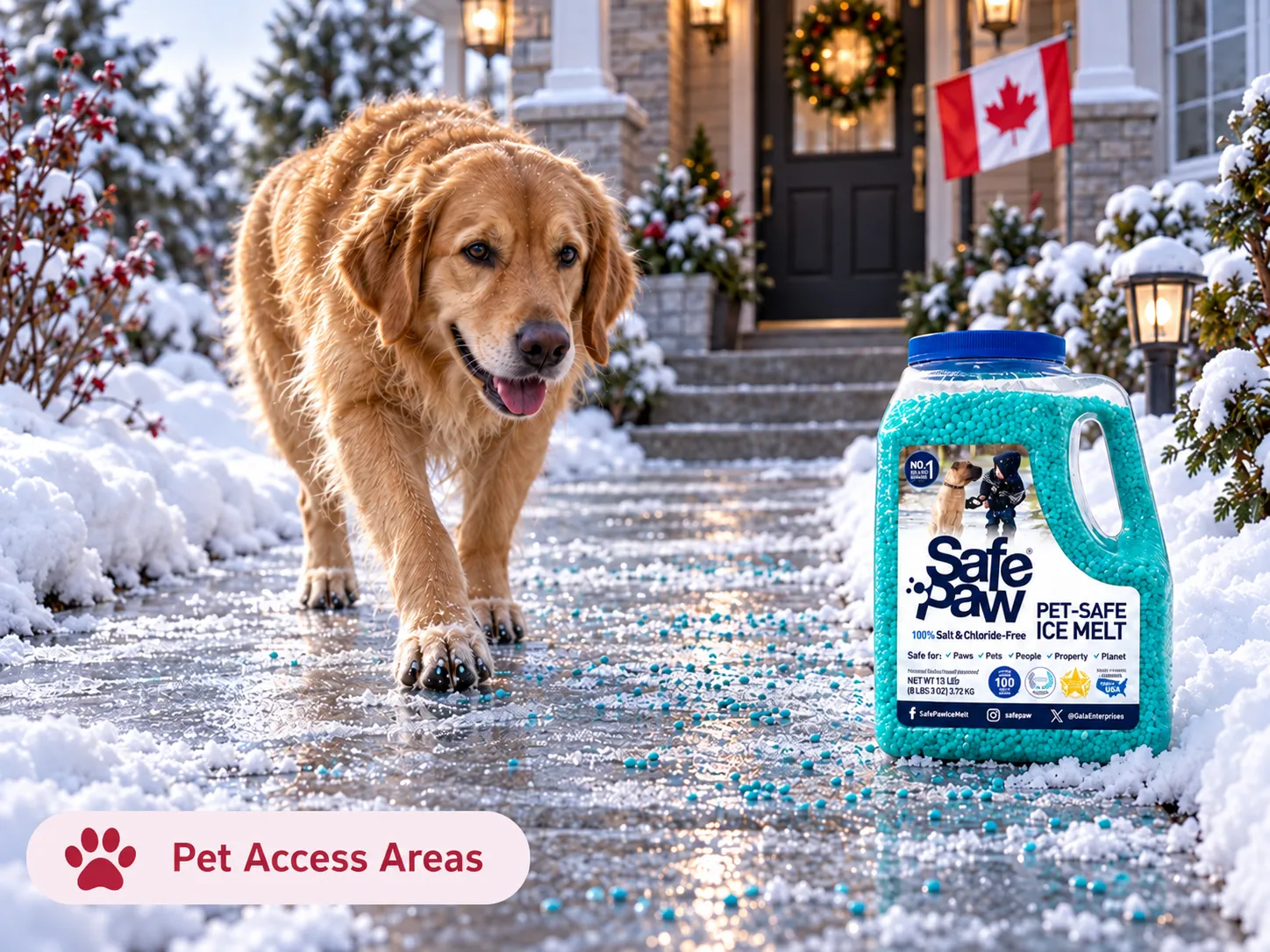
Care for paws after walks

Wipe your pet’s paws after walking through treated areas. Avoid letting pets eat deicer granules or treated snow.

Store with care

Keep ice-melt containers out of reach of pets and children. Follow the package’s handling and storage directions.

“Pet-friendly” is not permission for ingestion.
Check the actual formula and directions. Keep pets away from stored product, spilled granules and treated snow.

Start with the surface

What is underneath the ice?

Select a material to explore the checks that matter. Surface age, condition and manufacturer guidance should be considered alongside the Safe Paw label.

Select a material to explore the checks that matter. Surface age, condition and manufacturer guidance should be considered alongside the product label.

Concrete less than 12 months old? Do not apply Safe Paw. Confirm the surface’s age and condition before choosing an ice-control method.

Concrete · Before you apply

How old is your concrete?

Concrete age is the first check. Proper curing, surface condition and the directions for your particular installation still matter.

Confirm the age first.

Check with your installer or property records before applying an ice melt. A surface’s appearance alone does not establish its age or suitability.
Read the current concrete FAQ ↗
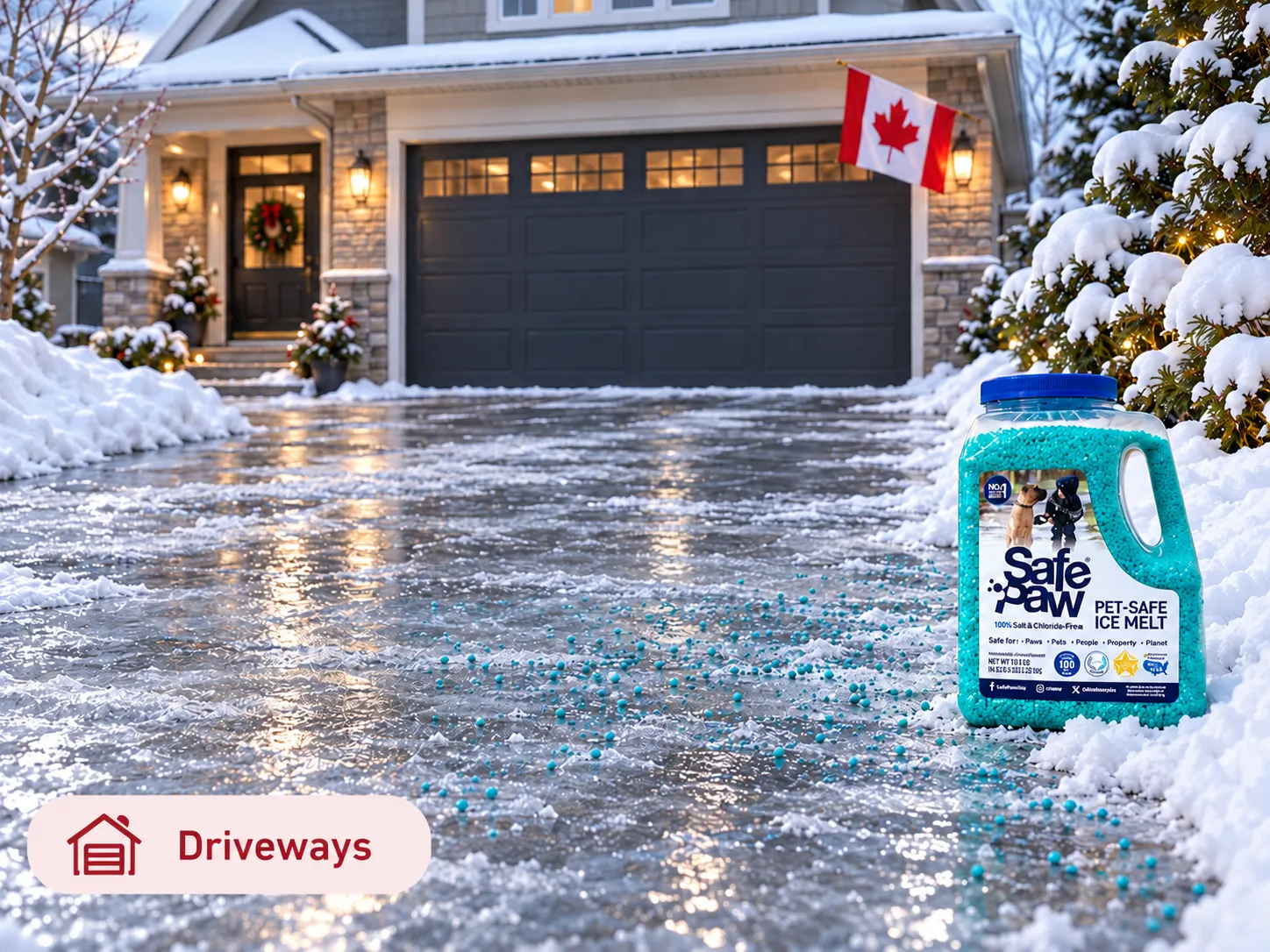
Winter driveway Driveways

A winter driveway setting. Check the actual material and condition of your own surface.

Material & condition

Identify the concrete and any finish or coating. Follow the installer’s winter-care guidance.

Application

Clear loose snow and apply according to the product’s current package directions.

Small-area check

Test a small patch before wider application, particularly when using the product for the first time.

Asphalt & Pavement

Check your installation before applying.

Check the pavement’s age, condition and installer guidance before choosing an ice melt. Confirm current Safe Paw instructions for your particular installation.

Age & curing

Ask the installer about curing requirements and winter treatment.

Surface condition

Consider existing wear, cracks, finishes and drainage.

Product directions

Check the current label and application amount before use.

Selecting a material does not confirm compatibility for a particular installation.

Read about surface considerations ↗

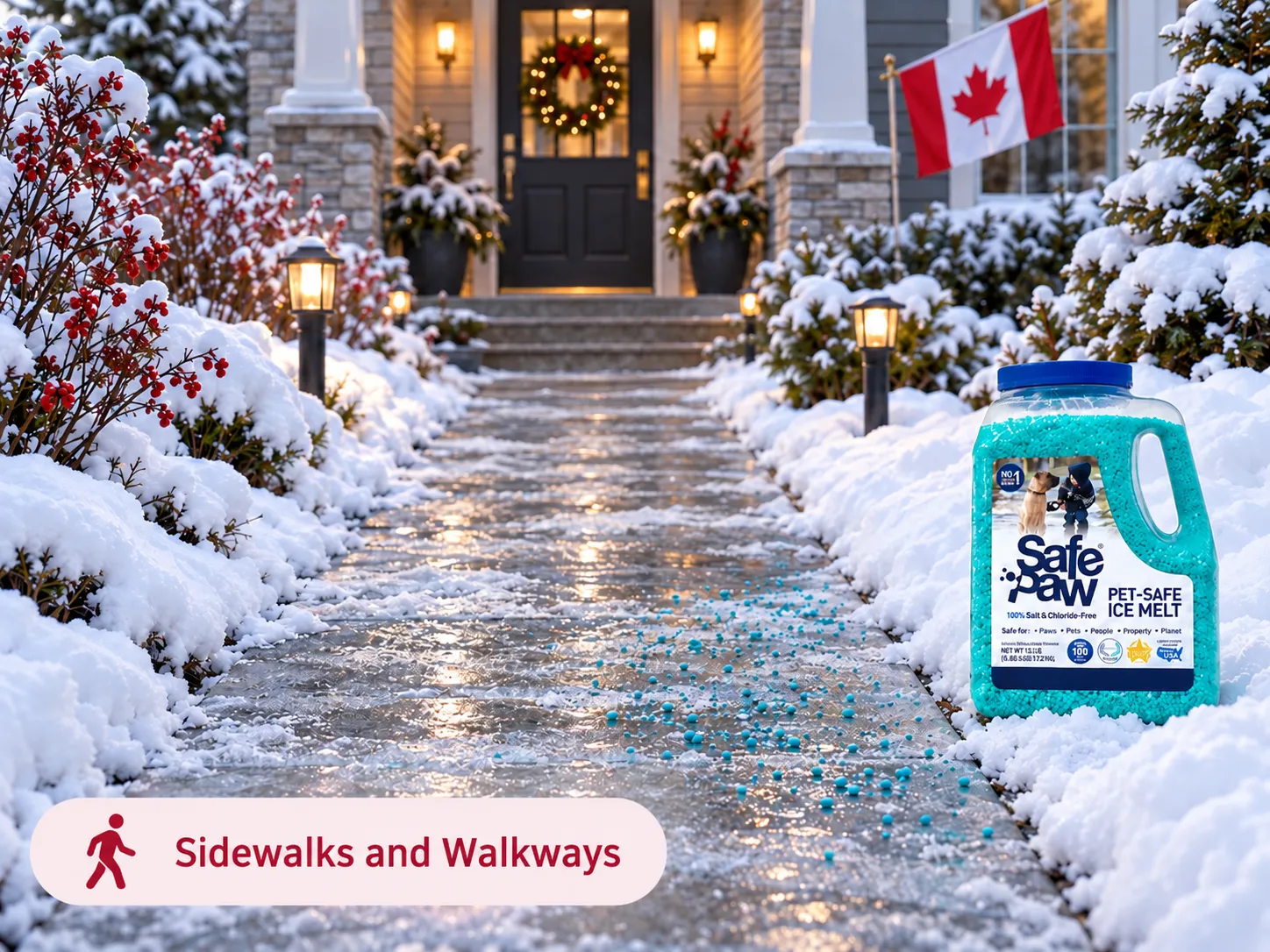
Pavers & Natural Stone

Identify the material and its finish.

Pavers and stone surfaces can have different materials, sealers and coatings. Check the surface maker’s winter-care directions together with the current ice-melt label.

Material

Confirm the type of paver or stone used in your installation.

Sealers & coatings

Check care requirements for the finish rather than assuming every surface responds alike.

Compatibility

Seek guidance when the material, treatment or suitability is uncertain.

Selecting a material does not confirm compatibility for a particular installation.

Read about surface considerations ↗
Wood & Composite Decking

Start with your decking manufacturer.

Check the decking manufacturer’s directions before applying an ice melt. Include any requirements for finishes, fasteners and cleanup when confirming suitability.

Decking type

Identify the wood or composite product and its care instructions.

Finish & hardware

Check requirements for coatings, fasteners and adjacent materials.

Winter care

Use only methods consistent with the surface instructions and product label.

Selecting a material does not confirm compatibility for a particular installation.

Read about surface considerations ↗
Compare your options

What’s in your ice melt?

Compare composition, melting method and use considerations. Rock salt and sodium chloride are grouped together because deicing rock salt is primarily sodium chloride.

Salt-free · Chloride-free

Safe Paw

What it is

A granular, salt-free and chloride-free ice melt designed for homes with pets and children.

How it is used

Apply to suitable icy outdoor areas according to the current package directions.

What to check

Surface material, age and condition. For concrete, the surface must be at least 12 months old. Test a small patch before wider application.

NaCl

Chloride-based deicer

Rock salt / sodium chloride

What it is

Rock salt used for deicing is primarily sodium chloride.

How it works

Forms a brine that lowers water’s freezing point, helping loosen ice from a treated surface.

What to check

Check application rate, tracked residue and chloride runoff. Melting effectiveness decreases in colder conditions.

Follow the current label and surface instructions for every option. Suitability depends on the formulation, conditions and how the product or system is used.

Rock salt / sodium chloride

Composition / method: Rock salt used for deicing is primarily sodium chloride. Forms a brine that lowers water’s freezing point, helping loosen ice from a treated surface.

Use considerations: Check application rate, tracked residue and chloride runoff. Melting effectiveness decreases in colder conditions.

Read the reference ↗

Magnesium chloride

Composition / method: A chloride salt used as a deicing ingredient, including in some products labeled pet-friendly. Attracts moisture and forms a melting brine.

Use considerations: A pet-friendly label does not make ingestion harmless. Check the formula and directions, prevent ingestion and clean paws after treated walks.

Read the reference ↗

Calcium chloride

Composition / method: A chloride salt commonly used for ice melting. Absorbs moisture and releases heat as it dissolves.

Use considerations: Check handling, contact, damp residue and surface compatibility. Follow the specific product’s directions.

Read the reference ↗

Potassium chloride

Composition / method: A chloride salt found in some deicers and blended formulas. It is a different ingredient from sodium chloride. Lowers water’s freezing point.

Use considerations: Check the complete blend, application directions and stated operating range. Do not assume a blend is chloride-free because it contains potassium chloride.

Read the reference ↗

Heated mats

Composition / method: A powered mat that heats a defined section of an entrance, walkway or steps. Uses localized heat rather than spreading granular deicer on the area covered by the mat.

Use considerations: Check power requirements, surface compatibility and the area covered. Portable mats differ from heating installed beneath a driveway.

Read the reference ↗

Portable mat or installed heating?
A removable heated mat and a heating system beneath a driveway have different installation and coverage requirements. Compare the particular system you are considering.

Everyday winter care

Four habits for treated areas.

Care starts before application and continues after a winter walk. Follow the directions for your product and the surface underneath.

Entrances, walkways and pet routes are useful places to build a consistent winter-care routine.

1. Clear loose snow

Remove loose snow before applying an ice melt so the product can reach the remaining icy area.

2. Follow the package

Use the directed amount. Extra product is not a substitute for correct application.

3. Clean paws after walks

Wipe away residue from treated areas before pets groom their paws.

4. Keep storage out of reach

Prevent pets and children from accessing stored deicer, spilled granules or open containers.

Your application reminder
0 of 4 reminders marked. Follow the current product and surface directions.
Look at the documents

Read beyond the front label.

Open the safety data sheet and published reports to check their dates, named samples, issuing organizations and scope.

Safety data sheet

Safety Data Sheet

25 May 2016

Prepared by

MSDS Authoring Services

Report issued to / named party

No separate recipient stated; manufacturer/supplier: Gaia Enterprises, Inc.

Handling, storage and first-aid information for Safe Paw Icemelter. This is an SDS, rather than a laboratory test.

Sample analysis report

Chloride Test Report

4 April 2019 · analysis

Analysis performed by

Unnamed subcontracted laboratory, PA DEP ID 06-00003. Issued by Analytical Laboratories, Inc. (ALI).

Report issued to / named party

Steve Greenwald; sample: Safe Paw and Thaw.

EPA Method 300.0 analysis. The issuing company’s report identifies the subcontracted laboratory by accreditation number.

Concrete testing report

Concrete Scaling Report

2 August 2016

Analysis performed by

Testing, Engineering and Consulting Services, Inc. (TEC Services).

Report issued to / named party

GAIA Enterprises; samples: Safe Paw and Traction Magic.

Historical scaling and microscopic evaluation. Test conditions do not replace current instructions to avoid concrete less than 12 months old.

A document has a defined scope.
Read the date, formulation or sample and testing conditions. A historical test or technical standard should not be treated as a general current approval.

Safety & surface FAQs

Clear answers for winter decisions.

Quick answers about ingredients, pet households, concrete, surface checks and heated mats.

Yes. Safe Paw’s published product information describes a salt-free, chloride-free formula. Check the current package and safety data sheet for product information.

Yes. Safe Paw is marketed as a pet-safe ice melt and its salt-free, chloride-free formula is designed for homes with pets and children. Follow the current product directions and keep stored product out of reach.

No. Safe Paw’s guidance excludes concrete less than 12 months old. For older concrete, check that it is properly cured and in suitable condition, follow the current directions and test a small area before wider application.

No. Age is only one consideration. Surface condition, finishes, coatings and installer guidance should also be checked alongside the product label.

Deicing rock salt is primarily sodium chloride. Packaging and blends can differ, so check the ingredient label rather than treating the names as completely separate ingredients.

No. Magnesium chloride can appear in pet-friendly deicers, but that does not make ingestion harmless. Check the ingredients, prevent ingestion and clean paws after treated-area exposure.

No. Do not treat that wording as permission for ingestion. Prevent access to granules, treated snow and stored product, and follow the current safety information.

No. Heated mats use electricity to warm a defined area. Granular ice melts are applied to suitable icy surfaces. Compare coverage, power requirements and surface instructions for the particular mat or product.

Check the current product label and the installer’s or surface manufacturer’s winter-care requirements before applying an ice melt. Consider the material and any sealer, coating or finish.

Open the Safety Data Sheet in the Safety Documents section of this page. The Product page’s Data Sheets section includes the wider collection and more detailed report metadata.

Check the details before winter arrives.

Review the product directions, surface guidance and supporting documents for your home.

Sources & further reading