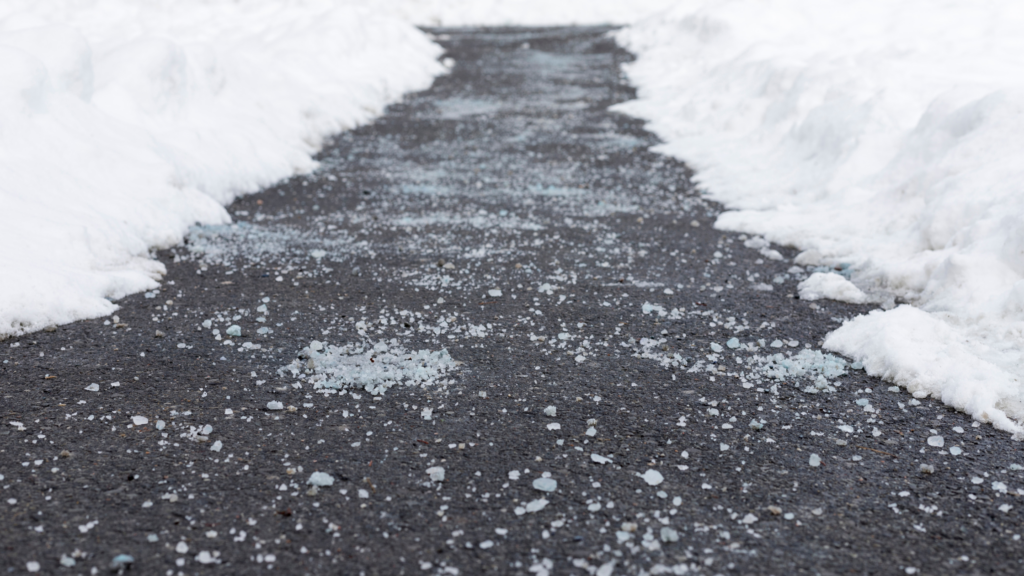

The question of why does salt melt ice has intrigued many, especially during winter months when dealing with icy sidewalks and roads. This article explores the science behind how salt melts ice and compares it with other deicing agents like magnesium chloride and calcium chloride, while also considering the benefits of using a chloride-free alternative like Safe Paw.
The Science Behind Salt Melting Ice
Understanding why does salt melt ice requires a dive into basic chemistry. Salt, or sodium chloride, lowers the freezing point of water, a process known as freezing point depression. When salt is applied to ice, it dissolves into the liquid water that's always present on the surface, forming a salt-water solution. This solution has a lower freezing point than pure water, thereby melting the ice.
The Process of Salt Interacting with Ice
As salt spreads over ice, it disrupts the water molecules' ability to form a solid structure, which is essential for maintaining ice. This interaction between the salt ions and water molecules results in the gradual melting of ice, a process often observed on roads and sidewalks during winter.
Comparing Salt with Magnesium Chloride and Calcium Chloride
- Magnesium Chloride: It is effective at lower temperatures and is less damaging to the environment compared to sodium chloride. However, it still has some corrosive properties and can be harmful if ingested by pets.
- Calcium Chloride: Known for its high melting efficiency, calcium chloride can work in even lower temperatures than magnesium chloride. But, like sodium chloride, it poses risks to concrete surfaces, and metal, and is harmful if ingested by pets.
The Downsides of Using Salt as an Ice Melter
While the question of how does salt melt ice is straightforward, its usage comes with several drawbacks:
- Corrosive Nature: Salt can cause significant damage to concrete, metal structures, and vehicles over time.
- Environmental Impact: It can lead to increased soil salinity, negatively affecting plant growth and contaminating water sources.
- Pet and Human Health Risks: Salt can be harmful to pets if ingested and can cause irritation to their paws.
Safe Paw: A Better Alternative
In light of the negatives associated with traditional salt and chloride-based ice melts, a product like Safe Paw offers a safer and more environmentally friendly solution:
- Non-Corrosive and Safe: Being chloride-free, Safe Paw doesn't pose a risk to concrete, metal surfaces, or vehicles.
- Eco-Friendly: It does not contribute to soil salinity or water pollution, protecting the environment.
- Safe for Pets and Humans: As a non-toxic product, it eliminates health risks for pets and people.
- Effective in Extreme Temperatures: Safe Paw is efficient at melting ice in temperatures as low as -2°F.
- Long Shelf Life and Efficient Spread Rate: This makes Safe Paw a cost-effective solution for ice melting needs.
Conclusion
The question of why does salt melt ice is rooted in chemistry, but the practical application of this knowledge brings with it several considerations. While traditional salt and chloride-based ice melts are effective, their environmental and health impacts cannot be ignored. Products like Safe Paw provide a viable, safe, and environmentally friendly alternative, addressing the need for effective ice melting without the associated risks of traditional salt-based products. By choosing a product like Safe Paw, consumers can contribute to a safer and more sustainable approach to managing ice and snow.